logo
제품
동영상
우리에 대하여
공장 여행
품질 관리
연락주세요
견적 요청
뉴스
VR 쇼
Dongguan Zhongli Instrument Technology Co., Ltd.
뉴스

Sand and Dust Test Chamber - Beyond IP5X IP6X: The Test That Exposes Your Product's Hidden Weaknesses

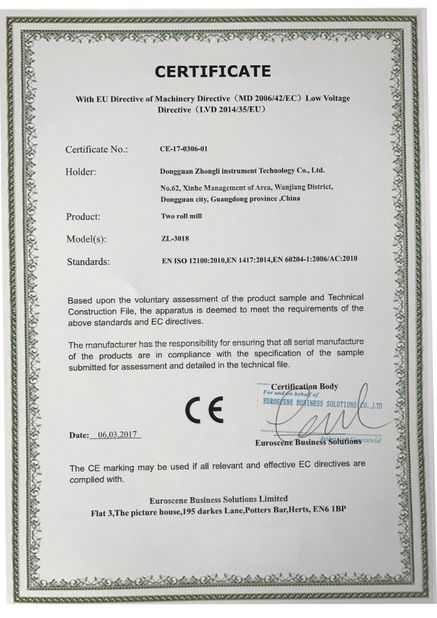
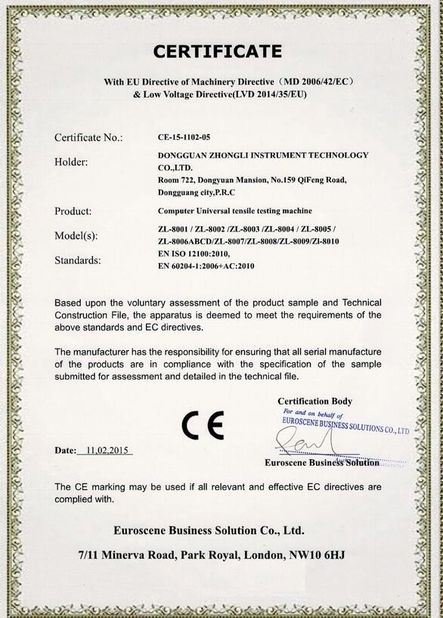
중국 Dongguan Zhongli Instrument Technology Co., Ltd. 인증
특별하은 회사. 파이브 스타!!! 품목을 아주 잘 포장하고 보호하는 급속하게 발송하거든. 회사도의 아주 좋은 기계장치 그리고 아주 좋은 커뮤니케이션. I는 둥관 중리 계기를 사용하여 좀더 보다는 높게 추천합니다.

—— Remy Attalin

판매인에게서 응답은 아주 빨라습니다 도움이 되었습니다. PO/PI를 발행하고 확인하는 것은 1 하루에서 행해졌습니다. 제품은 다음날에 거래가 확인된 후에 발송되었습니다. 판매인이 제공한 서비스의 점에서 더 만족할 수 없었습니다. 기계는 나무로 되는 케이스에서 잘 포장됩니다. 모두는 양호한 상태로 도착했습니다. 로 오는

—— Warunee Nahauythong

제가 지금 온라인 채팅 해요
회사 뉴스
Sand and Dust Test Chamber - Beyond IP5X IP6X: The Test That Exposes Your Product's Hidden Weaknesses
에 대한 최신 회사 뉴스 Sand and Dust Test Chamber - Beyond IP5X IP6X: The Test That Exposes Your Product's Hidden Weaknesses

Sand and Dust Test Chamber - Beyond IP5X IP6X: The Test That Exposes Your Product's Hidden Weaknesses


What is a Dust Test Chamber?

  A Dust Test Chamber, also known as a Sand & Dust Test Chamber, is a precision laboratory instrument designed to simulate natural wind-blown sand and dust climates. It recreates the harsh dusty environments that products might encounter in the real world by precisely controlling parameters such as dust concentration (using materials like silicate cement, talcum powder), wind speed, temperature, and humidity within a sealed testing space. Its core purpose is to evaluate a product's sealing integrity and resistance to corrosion.


에 대한 최신 회사 뉴스 Sand and Dust Test Chamber - Beyond IP5X IP6X: The Test That Exposes Your Product's Hidden Weaknesses  0


What Products is it Used For?

  Virtually any product that might be exposed to outdoor or dusty environments requires dust testing:

  Automotive Industry: Headlights, dashboards, connectors, seals, air intake systems.

  Electronics & Appliances: Smartphones, smartwatches, outdoor surveillance cameras, drones, EV charging stations.

  Military & Aerospace: Missile guidance systems, communication equipment, military vehicle components.

  Lighting Industry: Outdoor luminaires, street lights, landscape lighting.

  Home Appliances: Robotic vacuum cleaners, AC outdoor units.


에 대한 최신 회사 뉴스 Sand and Dust Test Chamber - Beyond IP5X IP6X: The Test That Exposes Your Product's Hidden Weaknesses  1


How is the Machine Calibrated for Accuracy?

  Regular calibration is essential to guarantee the accuracy and reliability of test results. Calibration is typically performed by accredited third-party metrology organizations and focuses on several key areas:

  Dust Concentration Calibration: Using a precision balance to weigh the dust collected over a specific period, calculating and adjusting the dust concentration inside the chamber to meet standard requirements.

  Wind Speed Calibration: Using a calibrated anemometer to measure wind speed at multiple points inside the chamber, ensuring it is uniform and stable at the set value (e.g., ≥1.5m/s as required by many standards).

  Temperature Calibration: Placing a standard temperature sensor inside the workspace and comparing the chamber's display reading to the actual temperature, then correcting any deviations.

  Pressure Difference Calibration: For IP5X and IP6X tests, a specific negative pressure must be maintained between the inside and outside of the chamber. Calibrating this pressure differential using a micro-manometer is a critical step.

  Sieve Mesh Inspection: Verifying that the wire mesh sieve used for dispensing dust conforms to the specified mesh size, ensuring the correct particle size distribution of the dust.


   a) The working space of the dust test equipment is divided into upper, middle, and lower layers. The middle layer passes through the geometric center A of the working space. Measurement points are located in the upper, middle, and lower layers.


   b) The measurement points are denoted by the symbols O, A, B, C, D, E, F, G, H, J, K, L, M, N.


   c) Relative humidity measurement points are denoted by the symbols Oh, Dh, Hh, Lh.


   d) The number and placement positions of the wind speed and dust concentration measurement points are exactly the same as those for the temperature measurement points.


   e) Measurement points E, O, Oh, U are located at the geometric centers of the upper, middle, and lower layers, respectively. The distance from other measurement points to the inner wall of the equipment is 1/6 of the length of the respective side, but the maximum distance shall not be greater than 500 mm, and the minimum distance shall not be less than 50 mm.


   f) When the volume of the dust test equipment is less than or equal to 2 m³, there are 9 temperature measurement points and [number intended here] relative humidity measurement points. The placement positions are as shown in the figure below: Schematic diagram of the placement of temperature and humidity measurement points when the dust test chamber volume is less than or equal to 2 m³.


에 대한 최신 회사 뉴스 Sand and Dust Test Chamber - Beyond IP5X IP6X: The Test That Exposes Your Product's Hidden Weaknesses  2


   g) When the volume of the dust test chamber is greater than 2 m³, there are 15 temperature measurement points and 4 relative humidity measurement points. The placement positions are as shown in the schematic diagram of the placement of temperature and humidity measurement points for dust test equipment with a volume greater than 2 m³.


   h) When the volume of the dust test equipment is less than 0.05 m³ or greater than 50 m³, the number of measurement points may be appropriately reduced or increased. Depending on the needs of testing and calibration, additional measurements may be added at suspected points within the working space of the dust test equipment.


에 대한 최신 회사 뉴스 Sand and Dust Test Chamber - Beyond IP5X IP6X: The Test That Exposes Your Product's Hidden Weaknesses  3


  Are you confident in your product's standalone dust or water resistance? In the real world, harsh weather often comes in combinations—a intense dust storm can be immediately followed by a torrential downpour. Can your product remain unscathed after being blasted by sand and then instantly drenched by rain?

  To answer this critical question, leading manufacturers are now combining Dust Test Chambers with Water Spray/IpX Test Chambers, creating an unparalleled environmental reliability testing regimen.

  The Synergistic Effect: 1+1 > 2

  Testing for dust or water resistance alone is foundational. However, combining them exposes the product's true vulnerabilities under the most extreme conditions.


에 대한 최신 회사 뉴스 Sand and Dust Test Chamber - Beyond IP5X IP6X: The Test That Exposes Your Product's Hidden Weaknesses  4


Simulating Real-World Environmental Sequences:

  "Dust then Water": Simulates a scenario where a dust storm is followed by rain. Will the dust clog drainage vents? Will the seals, now embedded with abrasive particles, still effectively keep water out?

  "Water then Dust": Simulates a product being covered in dust while wet. Will the mixture of water and dust form a slurry that causes electrical short circuits or mechanical seizure?

  Cyclic Testing: Rapidly alternating between dust and water spray environments for multiple cycles. This is the ultimate test for sealing materials, structural design, and components.

  What Hidden Flaws Does Combined Testing Uncover?

  When these two chambers work in concert, they reveal critical failure modes that individual tests cannot:

Seal Material Failure: Rubber seals can be microscopically scratched by abrasive dust. When rain arrives, these scratches become channels for water ingress.

  Drainage System Clogging: Fine dust particles can clog designed drainage holes or ventilation ports, preventing subsequent water from escaping and leading to internal accumulation.

  Accelerated Circuit Corrosion: Dust combined with water forms a conductive, corrosive electrolyte solution, dramatically accelerating the electrochemical corrosion of PCBs and components.

  Mechanical Seizure: Dust can harden when wet, cementing itself in moving parts like bearings and hinges, causing them to lock up completely.


Which Industries Need This Combined Approach Most?

  New Energy Vehicles (NEVs): Battery packs, charging inlets, drive motors, and BMS must be protected from both road spray and dust.

Outdoor Telecom & Energy: 5G base stations, outdoor cabinets, photovoltaic inverters, and energy storage systems face complex year-round weather.

  Military & Aerospace: Equipment deployed in any climate; reliability is mission-critical and lifesaving.

  High-End Consumer Electronics: Such as professional outdoor cameras, adventure-grade smartphones, and all-terrain drones, whose key selling point is stable performance in extreme environments.

  How is Combined Testing Implemented?

  Combined testing is more than just moving a sample from one chamber to another. Advanced testing solutions include:

  Test Profile Programming: Using a unified control system to create precise test sequences for the sample, e.g., "8 hrs Dust -> 2 hrs Dwell -> 4 hrs Water Spray -> Repeat Cycle..."

  Intermediate Inspection: Performing preliminary functional and visual checks during the intervals of the test sequence to pinpoint the exact stage of failure.

  Comprehensive Evaluation: Conducting thorough performance testing and teardown analysis post-test to accurately assess the synergistic damaging effects of dust and water.


에 대한 최신 회사 뉴스 Sand and Dust Test Chamber - Beyond IP5X IP6X: The Test That Exposes Your Product's Hidden Weaknesses  5

선술집 시간 : 2025-11-27 13:55:40 >> 뉴스 명부
연락처 세부 사항
Dongguan Zhongli Instrument Technology Co., Ltd.

담당자: Ms. Fiona Zhong

전화 번호: +86 135 3248 7540

팩스: 86-0769-3365-7986

회사에 직접 문의 보내기 (0 / 3000)